































Document Actions
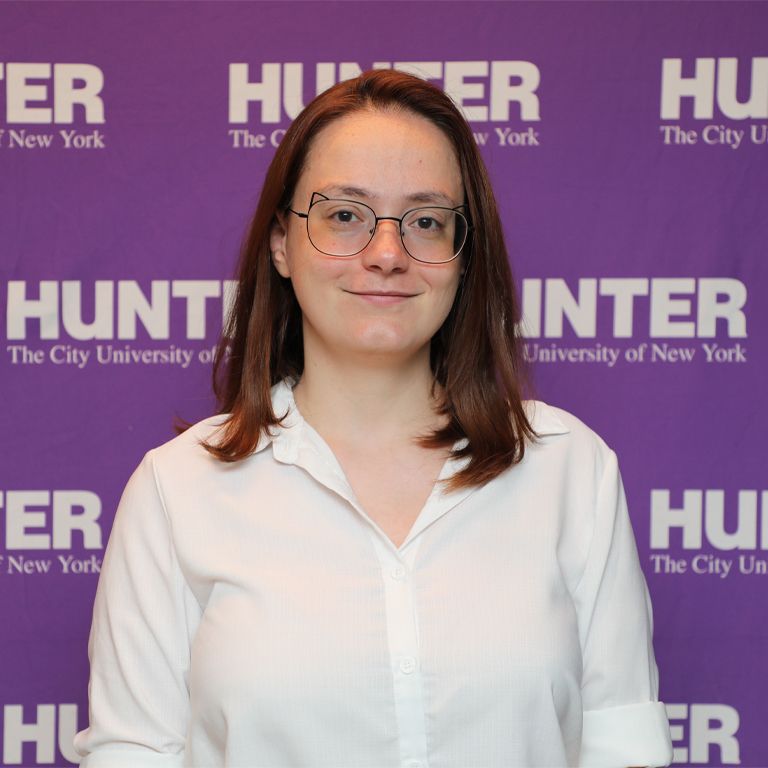
Maria Tomasz, Ph.D.
Distinguished Professor of Chemistry (Emeritus) - Bioorganic & Medicinal Chemistry
![]() |
Maria Tomasz is Distinguished Professor Emerita of Chemistry and Biochemistry at Hunter College, City University of New York. She received her undergraduate education in chemistry at Lorand Eotvos University, Hungary and her PhD in organic chemistry at Columbia University. She joined the faculty at Hunter College in 1966, where she has spent the rest of her professional career. Her research has focused on the molecular basis of the activity of cancer chemotherapeutic agents that target DNA covalently, and she has published 100 papers in this area. Her honors include a MERIT Award by the National Cancer Institute, a Japan Society for the Promotion of Science Invitational Fellowship, and she is a Fellow of the American Association for the Advancement of Science. Prof. Tomasz's Biography >> Click Here |
Contact Information:
office 617BW, tel 212-772-5387, fax 212-650-3501, email mtomasz@hunter.cuny.edu
Education: B.S. Eotvos Lorand University, Hungary, M.A. Columbia University, Ph.D. Columbia University
Note: As of July 2008, Prof. Tomasz's research laboratory has closed. No students can be accommodated for research.
Research Summary:
Our main research interest concerns the mode of action of drugs which bind to DNA covalently as their target. Efforts are focused on the clinicallly important anticancer agents, the mitomycins. These drugs attach themselves covalently to guanine in DNA. A unique feature is their ability to cross-link DNA between the complementary strands. DNA cross-links represent one of the most lethal types of DNA damage. One of our main goals is to elucidate the covalent chemistry of drug-DNA interactions, to detect specific DNA sequences targeted by the drugs and characterize the consequent three-dimensional alterations of DNA structure. This information is used to elucidate the molecular basis of the observed biological effects of the mitomycins, e.g. DNA repair, inhibition of DNA replication and selective cytotoxicity to tumor cells. Another related area of our investigation is the bioactivation of mitomycins by flavoreductase enzymes. Such processes are fundamentally related to the action of numerous important antitumor drugs. Our analysis of the mode of action of known anticancer drugs leads to rational, mechanism-based design and synthesis of new drugs.
Selected Publications
T. Abbas, M. Olivier, J. Lopez, S. Houser, G. Xiao, G. Suresh Kumar, M.Tomasz, J.Bargonetti, “Differential activation of p53 by the various adducts of mitomycin C” J. Biol. Chem. 277, 40513-9 (2002).
Y . Palom, G. Suresh Kumar, L.Q. Tang, M.M. Paz, S. M. Musser, S. Rockw ell and M. Tomasz, “Relative toxicities of DNA cross-links and monoadducts: New insights from studies of decarbamoyl mitomycin C and mitomycin C.” Chem. Res. Toxicol. 15, 1398-1406 (2002).
M. M. Paz, G. Suresh Kumar, M. Glover, M. J. Waring, and M. Tomasz, “Mitomycin dimers: Polyfunctional cross-linkers of DNA”. J. Med. Chem. 47, 3308-3319 (2004).
H. A. Seow, P. L Penketh, M. F. Belcourt, M. Tomasz, S. Rockwell, and A.C. Sartorelli, “Nuclear Overexpression of NAD(P)H:Quinone Oxidoreductase 1 in Chinese Hamster Ovary Cells Increases the Cytotoxicity of Mitomycin C Under Aerobic and Hypoxic Conditions”J. Biol. Chem. 279, 31606-31612 (2004).
C. D. Utzat, C. C. Clement, L. A. Ramos, A. Das, M. Tomasz, and A. K. Basu “The DNA adduct of the Mitomycin C Metabolite 2,7-Diaminomitosene is a Non-Toxic and Non-Mutagenic DNA Lesion in Vitro and in Vivo”. Chem. Res. Toxicol. 18, 213-223 (2005).
E. K. Boamah, D. E. White, K. E. Talbott. N. C. Arva. D. Berman, M. Tomasz, and J. Bargonetti, “Mitomycin-DNA Adducts Induce p53-Dependent and p53-Independent Cell Death Pathways”, ACS Chemical Biology 2, 399-407 (2007).
E. Champeil, M.M. Paz, S. Ladwa, C.C. Clement, A. Zatorski, and M. Tomasz, "Synthesis of an Oligodeoxyribonucleotide Adduct of Mitomycin C by the Postoligomerization Method via a Triamino Mitosene" J. Am. Chem. Soc., 130, 9556-9565 (2008).
M. Tomasz, M. M. Paz, S. Ladwa, E. Champeil, Y. Liu, S. Rockwell, E. Boamah, J. Bargonetti, J. Callahan, and J. Roach "Mapping DNA adducts of mitomycin C in cell lines using liquid chromatography/electrospray tandem mass spectrometry", Chem. Res. in Toxicol. 21, 2370-2378 (2008).
X. Shen, H. Do, Y. Li, W.-Y. Chung, M. Tomasz, J. P. de Winter, B. Xia, S. J. Elledge, W. Wang and L. Li, “Recruitment of Fanconi Anemia and Breast Cancer Proteins to DNA Damage Sites Is Differentially Governed by Replication”, Molecular Cell, 35, 716-723 (2009).
M. Tomasz, "Drug-DNA interactions of the mitomycins", in Austin, D. (ed.), Chemical Biology: The role of Chemistry in our fundamental understanding of Biology, The Biomedical & Life Sciences Collection, Henry Stewart Talks Ltd, London (2008).
E. Boamah, A. Brekman, M. Tomasz, N. Myeku, M. Figureido-Pereira, and J. Bargonetti “DNA adducts of decarbamoyl mitomycin C efficiently kill cells with compromised p53 through proteasome-mediated degradation of Chk1”. Chem. Res. Toxicol. 23, 1151-1162 (2010).
J. Bargonetti, E. Champeil and M. Tomasz, “Differential Toxicity of DNA Adducts of Mitomycin C” (A review). J. Nucleic Acids, v. 2010, Article ID 698960 (2010); doi:10.4061/2010/698960
M-w. Weng, Y. Zheng, V. P. Jasti, E. Champeil, M. Tomasz, Y. Wang, A. K. Basu and M-s. Tang, “Repair of mitomycin C mono- and interstrand cross-linked DNA adducts by UvrABC: a new model”. Nucleic Acids Res. 38, 6976-6984 (2010).