|
|
HISTORY
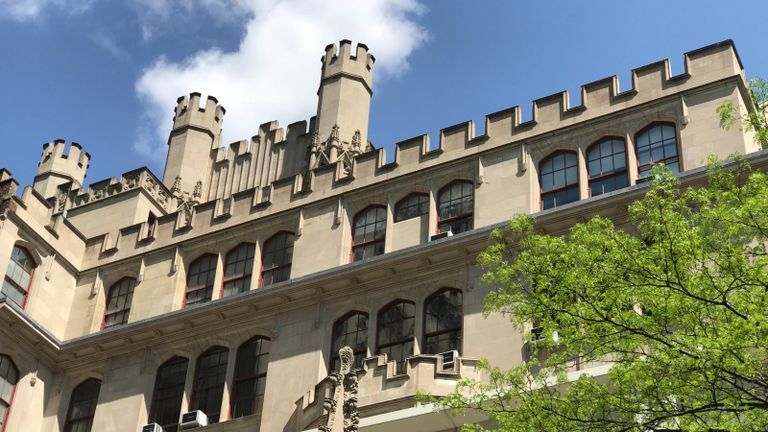
Founded in 1870 by Irish immigrant and social reformer Thomas Hunter
as a teacher-training school for women, Hunter College has long enjoyed
a distinguished reputation for liberal arts and sciences and professional
schools. Completely co-educational since 1964, Hunter is one
of the largest colleges in the City University of New York (CUNY).
Click here for a chronology of Hunter milestones
from 1847 to the present.
MISSION
Hunter College is a comprehensive teaching, research and service institution,
long committed to excellence and access of undergraduate and graduate
students in the liberal arts and sciences, as well as in several professional
fields: education, health sciences, nursing and social work.
Founded
in 1870, Hunter is one of the oldest public colleges in the country,
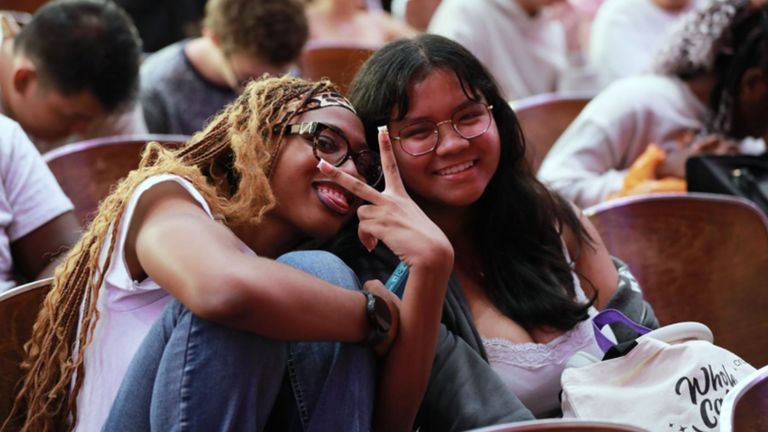
dedicated from its earliest days to serving a student body which reflects
the diversity of New York City. Hunter takes pride in the success
it has had over the years in enabling the people of New York to combine
the strengths of their varied experiences with the skills they need
to participate effectively in the wider society. Committed to the
achievement of a pluralistic community, Hunter College offers a curriculum
designed to meet the highest academic standards while also fostering
understanding among groups from different racial, cultural and ethnic
backgrounds.
The goal
of a Hunter College education is to encourage the fullest possible
intellectual and personal growth in each student. While preparation
for specific careers is an important objective of many programs, the
fundamental aim of the college experience as a whole is to develop
a student's rational, critical and creative powers. Such development
involves the abilities to conceptualize and analyze, to relate the
concrete and particular to the abstract and general, and to think
and write logically and coherently. It also includes a broadening
and deepening of outlook; an awareness of one's own and other cultures
as well as of the enduring questions and answers concerning being,
purpose, and value that confront humanity. Finally, the educational
experience at Hunter is intended to inspire a zest for learning as
well as to bring the recognition that learning is pleasurable and
knowledge is useful.
While
teaching and research are its primary mission, community service is
also an essential goal of the College. Hunter faculty seek to generate
new knowledge and to design programs to address the myriad cultural,
social and political needs of New York City and the world.
CAMPUSES
- East
68th Street Campus,
Lexington and Park Avenues.
Four major buildings housing both undergraduate and graduate programs
in the arts, sciences, and education. Among the facilities
at this campus are a nine-story library with full Internet access;
a language laboratory; and sophisticated academic computing services.
The Hunter College Sportsplex, which has five gymnasia, is one of
the premiere sports centers in the metropolitan area.
- Brookdale
Health Science Center, East 25th Street, 1st Avenue and FDR
Drive. Hunter's School
of Nursing, School
of Health Sciences, the Brookdale
Center on Aging, and several research centers are located here.
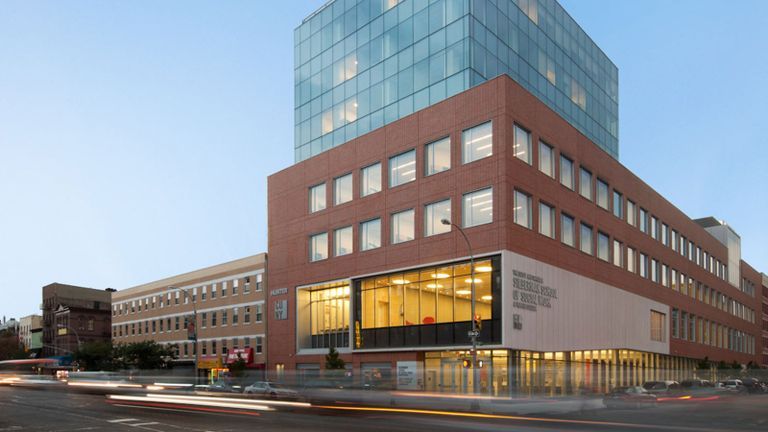
- School
of Social Work,
East 79th Street, Lexington and Park Avenues. Consistently
rated among the top ten schools of social work in the nation by
U.S. News and World Report's "America's Best Graduate Schools."
- Hunter
College Campus Schools, East 94th Street, Park and Madison
Avenues. Publicly funded schools for the intellectually gifted,
preschool through grade 12.
- The
MFA Building, West 41st Street, 9th & 10th Avenues
The MFA Gallery, located in the MFA Building, is a 5,000 square-foot
exhibition space. Each semester, three major exhibition
THE
ARTS AT HUNTER
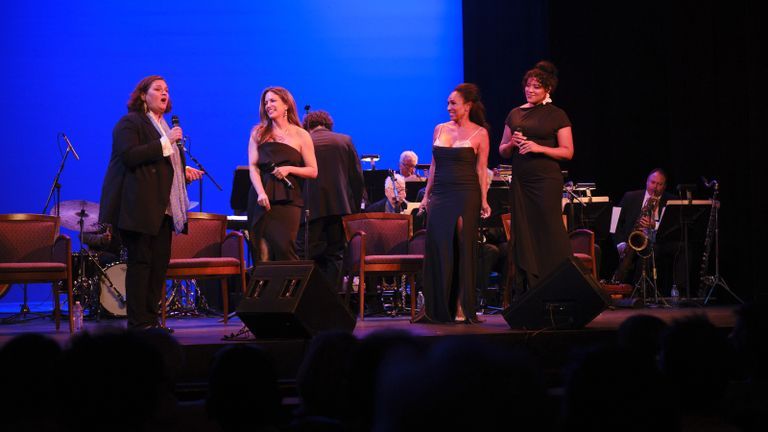
The world's greatest artists appeared at Hunter over the years under
the aegis of its Concert Bureau, which closed in 1975. In 1993,
the multifunctional Sylvia and Danny Kaye Playhouse opened and has
since become an important arts venue and resource for all New Yorkers.
Also located at the East 68th Street campus is the state-of-the-art
Ida K. Lang Recital Hall and the Frederick Loewe Theatre. The
Bertha and Karl Leubsdorf Art Gallery, located in the West Building
of the 68th Street Campus, houses professionally organized exhibits.
ACADEMIC
OVERVIEW
As a comprehensive liberal arts and sciences college, Hunter
offers 70 programs leading to a BA or BS degree; 10 BA-MA joint degree
programs; and 75 graduate programs.
- Hunter
educates a large cohort of New York's professionals--teachers, nurses,
social workers and community health practitioners. The overwhelming
majority of these graduates put their vital skills to work in the
metropolitan area.
- Hunter
was one of the first colleges in the nation to pass a 12-credit
curriculum requirement in courses addressing issues of pluralism
and diversity. A strong liberal arts education is emphasized
for students of all majors.<
- Doctoral
studies are conducted at Hunter in Chemistry, Physics, Biology,
Biochemistry, and Biopsychology and the CUNY doctoral program in
Social Work is based at Hunter. In addition, Hunter faculty
are extensively involved in Ph.D. programs at the City University's
Graduate Center.<
- Hunter's
strength in science has earned national recognition: two rigorous
programs (MARC and MBRS) funded by the National Institutes of Health
train and financially support competitively selected minority students
to pursue M.D., M.D./Ph.D. or Ph.D. degrees in the sciences.
- A
chapter of Phi Beta Kappa has existed at Hunter since 1920 (less
than 10% of the nation's liberal arts colleges qualify academically
for this honor). Undergraduate scholars may also participate
in the interdisciplinary Thomas Hunter Honors Program.
- Classroom
instruction is enhanced through a variety of hands-on internships,
including a Human Rights Internship, which provides employment in
human rights organizations in New York; and the Public Service Scholar
program, offering students valuable career experience in government
and nonprofit agencies.
- Hunter
is the only college in the world that has produced two female Nobel
Prize winners: alumnae Rosalyn Yalow and Gertrude Elion.
STUDENTS
- The
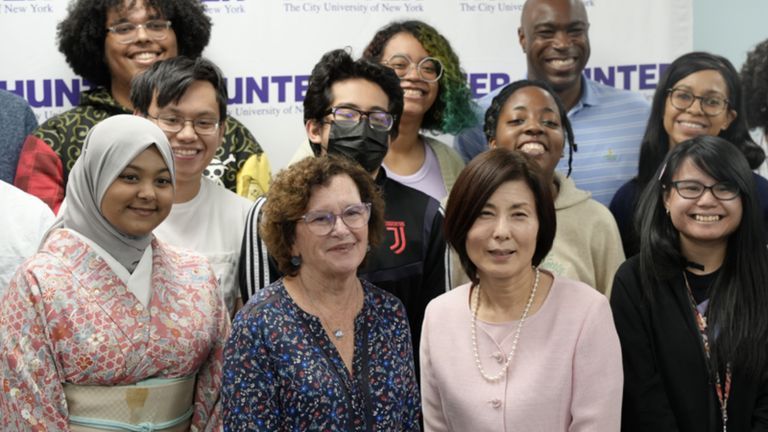
undergraduate student body is a reflection of the cultural, ethnic,
and racial diversity characteristic of New York City.
- College
enrollment is more than 20,000. Nearly one out of four Hunter
students is enrolled in a graduate program; the most popular are
Education and Social Work.
- Two
- Hunter
students come from more than 140 nations and speak more than 100
languages, making the college one of America's most ethnically and
culturally diverse.
- More
than 50% of students are the first in their families to attend college.
- Almost
half of matriculating undergraduates are age 23 or older. Nearly
three out of four students are female. The college maintains
its tradition of concern for women and women's issues, supporting
a women's center for returning women students and a nationally renowned
interdisciplinary Women's Studies program.
- Hunter
students have received Ford Foundation Awards, Fulbrights, the Howard
Hughes Fellowships, and many other prestigious academic honors.
- In
the six years, 61% of Hunter applicants on average were accepted
to medical school--a rate that's 25% higher than the national average.
RESEARCH
CENTERS AND INSTITUTES
Through innovative, sometimes ground-breaking research and programs,
Hunter's many research centers strive to improve the quality of life
for New Yorkers and the larger community. They include: <
- The
Brookdale Center on Aging. A national leader in the field.
Its work focuses on education and training for gerontology careers,
as well as legal advocacy, research, and model programs for the
elderly. <
- Center
for Puerto Rican Studies (CENTRO). The only university-based
research institute in the United States dedicated to the interdisciplinary
study of the Puerto Rican experience. In July 1995, the government
of Puerto Rico gave CENTRO custody of the historical archives of
the Puerto Rican migration to the U.S.
- Center
for the Study of Family Policy.
This Center, staffed by faculty and students, not only studies social-welfare
policies affecting families, it brings about change by helping create
new legislation, obtaining grants to develop new services, and publishing
its findings. Among its wide-ranging family-oriented concerns
are social security, health care, food stamps, school meals, child
welfare, and public assistance.
- Center
on AIDS, Drugs and Community Health.
Links the public health resources and expertise of Hunter College
with individuals and grass-roots organizations committed to battling
infectious diseases, drugs, violence and other community health
threats.
- Center
for Occupational and Environmental Health.
Assists, educates and trains labor groups, community organizations
and other professionals in the detection and prevention of occupational
and urban environmental hazards such as polluted air and exposure
to lead and other toxins.
- Institute
for Biomolecular Structure and Function. Established
in 1988 to unite the efforts of chemists, biologists, and psychologists
researching biomolecular structure and interactions and their effects
on gene function. Includes the federally funded Center for
the Study of Gene Structure and Function.
INTERDISCIPLINARY
PROGRAMS
- Latin
American and Caribbean Studies
- Energy
and Environmental Policy Studies
- Asian
American Studies
- Women's
Studies
- Jewish
Social Studies
- Religion
- Thomas
Hunter Honors Program
PRESIDENT
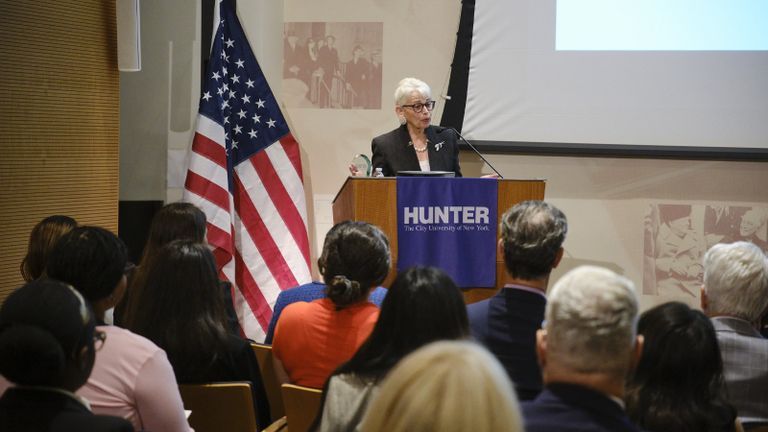
Jennifer J. Raab became Hunter College's 13th president on June 11,
2001.
FACULTY
Over the years, the roster of Hunter's best-known professors has included
the social critic Irving Howe, literary critic Alfred Kazin, poet
and Hunter graduate Audre Lorde, director Harold Clurman, Spelman
College President Johnnetta Cole, countertenor Russell Oberlin, composer
Louise Talma, painter Robert Motherwell, sculptor Tony Smith and,
as visiting professors, novelist Philip Roth, actress Claire Bloom
and actress/alumna Ruby Dee.
HUNTER
COLLEGE CAMPUS SCHOOLS
Hunter College High
School and Hunter College
Elementary School are publicly funded schools for the intellectually
gifted, preschool through grade 12. Located at East 94th Street
|
|