

School of Health Professions
Explore our programs in Nutrition, Public Health, Physical Therapy, and Speech-Language Pathology & Audiology, where students enhance individual well-being through hands-on service, research, and comprehensive education.



Brightspace has replaced Blackboard as the Learning Management System for Faculty and Students.

Overview
Since 1968, Hunter's School of Health Professions has been at the forefront of healthcare education, empowering future leaders in Nutrition and Public Health, Physical Therapy, and Speech-Language Pathology & Audiology. Found on the Brookdale and Silberman Campuses, our dynamic programs blend rigorous academic training with hands-on experience, ensuring you’re well-prepared to make a meaningful impact in diverse healthcare settings. Whether you aspire to work in healthcare centers, schools, or private practice, our supportive faculty and state-of-the-art resources will help you turn your passion for health into a fulfilling career. Begin your journey with us and become a healthcare professional today!
Departments

The Department of Nutrition and Public Health (NPH) houses multiple degree pathways at both the undergraduate and graduate levels.
- Chair: Ming-Chin Yeh
- (212) 396-7776
- East Harlem Campus
- 2180 Third Avenue (at 119th St.), Room 507
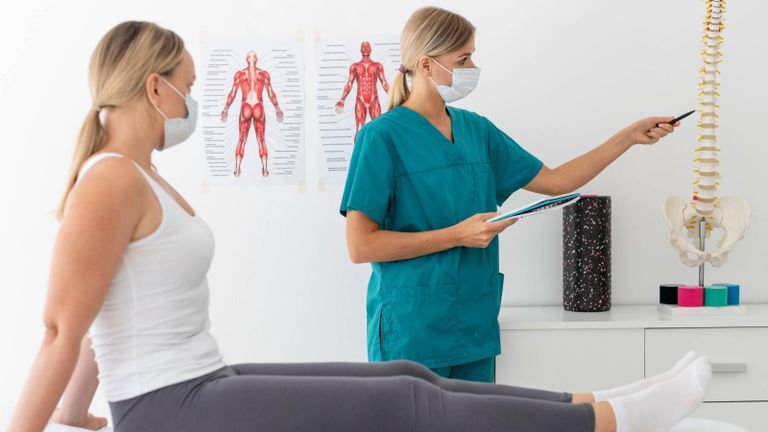
Discover a comprehensive education in the Doctor of Physical Therapy (DPT) program, where students explore every facet of the physical therapy field.
- Chair: Cristiana Collins
- (212) 396-7103
- Brookdale Campus
- 425 East 25th Street, Room E 008
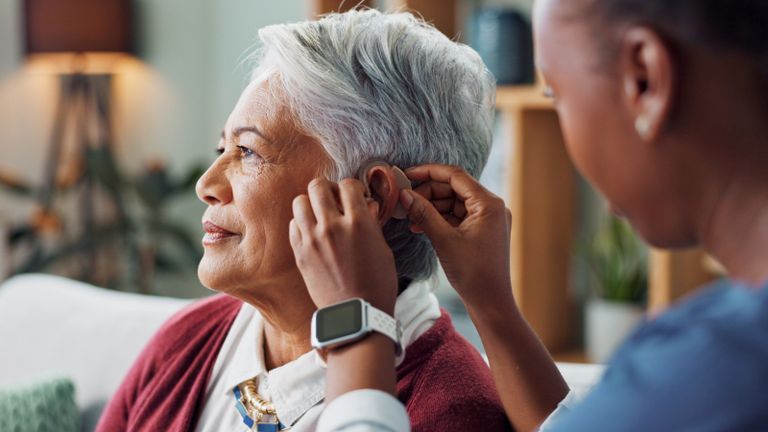
The Department of Speech-Language Pathology & Audiology offers a Master of Science (MS) in Speech-Language Pathology with on-campus clinical training.
The Center
The Hunter College Center for Communication Disorders (Speech-Language-Hearing Clinic) is located at the Brookdale Health Sciences campus, 425 East 25 St., Room 133 North. The Center is an integral part of the Communication Sciences Program. The Center provides diagnostic and therapeutic services for a wide variety of language, speech, voice, fluency, swallowing, hearing, communication modality, and social communication disorders. Audiological services include complete audiological evaluations, auditory processing disorder testing, and auditory brainstem response assessment with state of the art instrumentation. Services are available to the Hunter College community as well as the general public.
Visit Center for Communication Disorders

Academic Services
The Health Professions Library supports the curricular and research needs of students and faculty at Hunter's Brookdale Campus. It serves the Hunter-Bellevue School of Nursing, School of Health Professions, and Department of Medical Laboratory Sciences. It also serves many Brookdale research institutes, namely the Brookdale Center on Healthy Aging and Longevity, the Center for Community and Urban Health, the Center for Environmental and Occupational Health, and the Center for Communication Disorders. The library houses 26,500 volumes and 224 professional journals with digital access to full-text articles from over 50,000 journals. The 10,000 sq./ft space seats 212 (156 in the library and 56 at computers).
Visit Health Professions LibraryLearning Center
The Health Professions Education Center (HPEC) is an academic learning center serving all students and faculty at the Hunter College Nursing and School of Health Professions. A variety of comprehensive support services and programs are offered at the HPEC to enhance student academic success, retention, and completion rates by applying best practices and addressing student learning needs from multiple pedagogical perspectives. Our services are designed to develop critical thinking, reinforce practice of clinical skills, and foster a supportive, professional environment for student collaboration and scholarship.
The Health Professions Education Center
Contact
Facilities
Brookdale Health Science Center
425 East 25th Street
New York, NY 10010
Administration
Administrative Offices
68th Street Campus, West Building 6th floor
(212) 481-4313